

Description
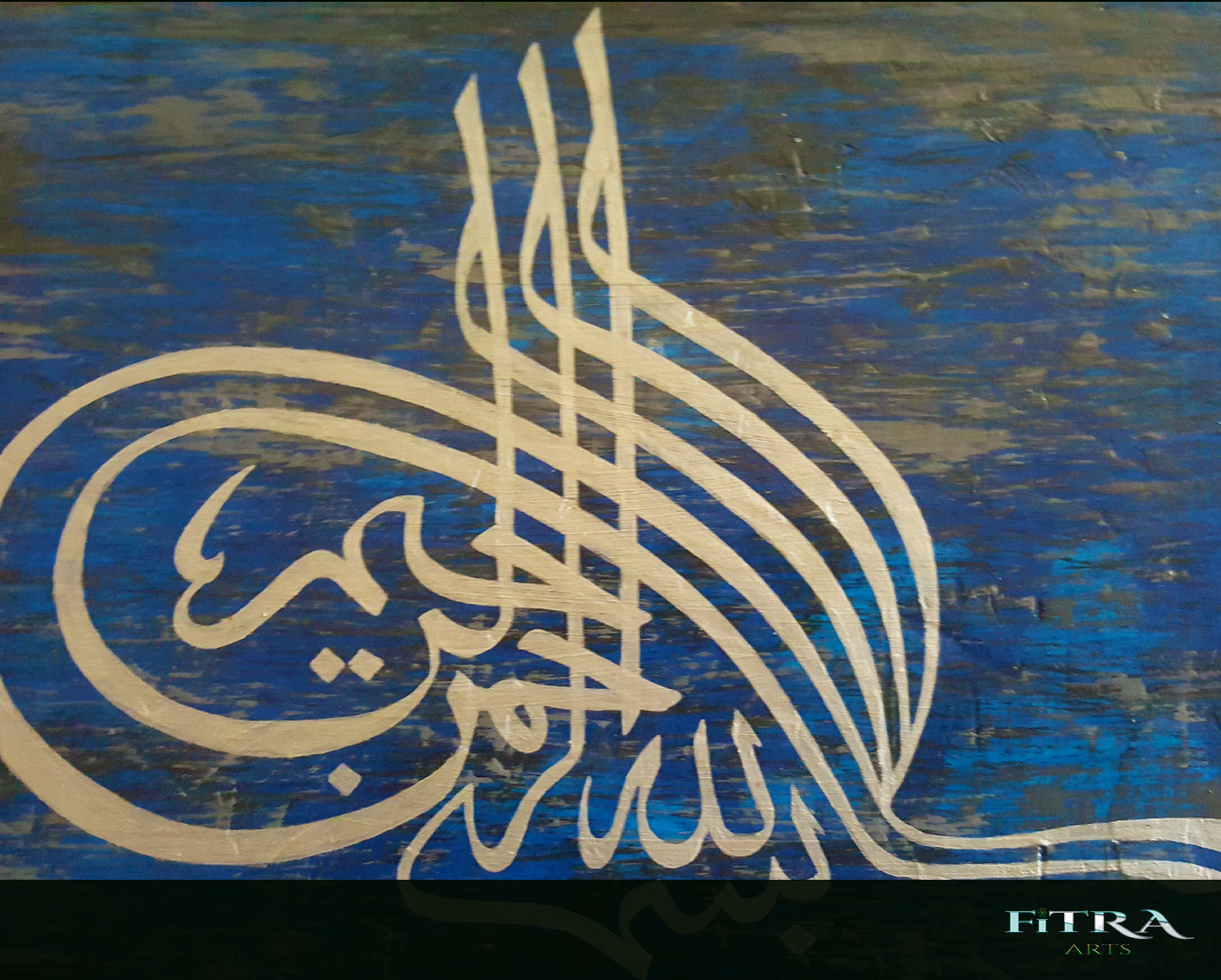
Basmala Tughra
A tughra (Ottoman Turkish: طغرا, romanized: ṭuġrā; Turkish: tuğra) is a calligraphic monogram, seal or signature of a sultan that was affixed to all official documents and correspondence. Inspired by the tamgha, it was also carved on his seal and stamped on the coins minted during his reign. Very elaborate decorated versions were created for important documents that were also works of art in the tradition of Ottoman illumination, such as the example of Suleiman the Magnificent.
The tughra was designed at the beginning of the sultan’s reign and drawn by the court calligrapher or nişancı on written documents. The first tughra examples are from the 14th century.
Tughras served a purpose similar to the cartouche in ancient Egypt or the Royal Cypher of British monarchs. Every Ottoman sultan had his own individual tughra.
The Basmala or Basmalah (Arabic: بَسْمَلَة, romanized: basmalah; also known as Tasmiya by its opening words Bi-‘sm-illāh; بِسْمِ ٱللهِ, “In the name of God”) is an Islamic phrase meaning “In the name of God, the Most Gracious, the Most Merciful” (Arabic: بِسْمِ ٱللهِ ٱلرَّحْمَٰنِ ٱلرَّحِيْمِ, bi-smi llāhi r-raḥmāni r-raḥīmi).[1][2] It is one of the most important phrases in Islam and is frequently recited by Muslims before performing daily activities and religious practices, including prayer, and at the start of verses (āyah) or chapters (surahs) of the Qur’an.
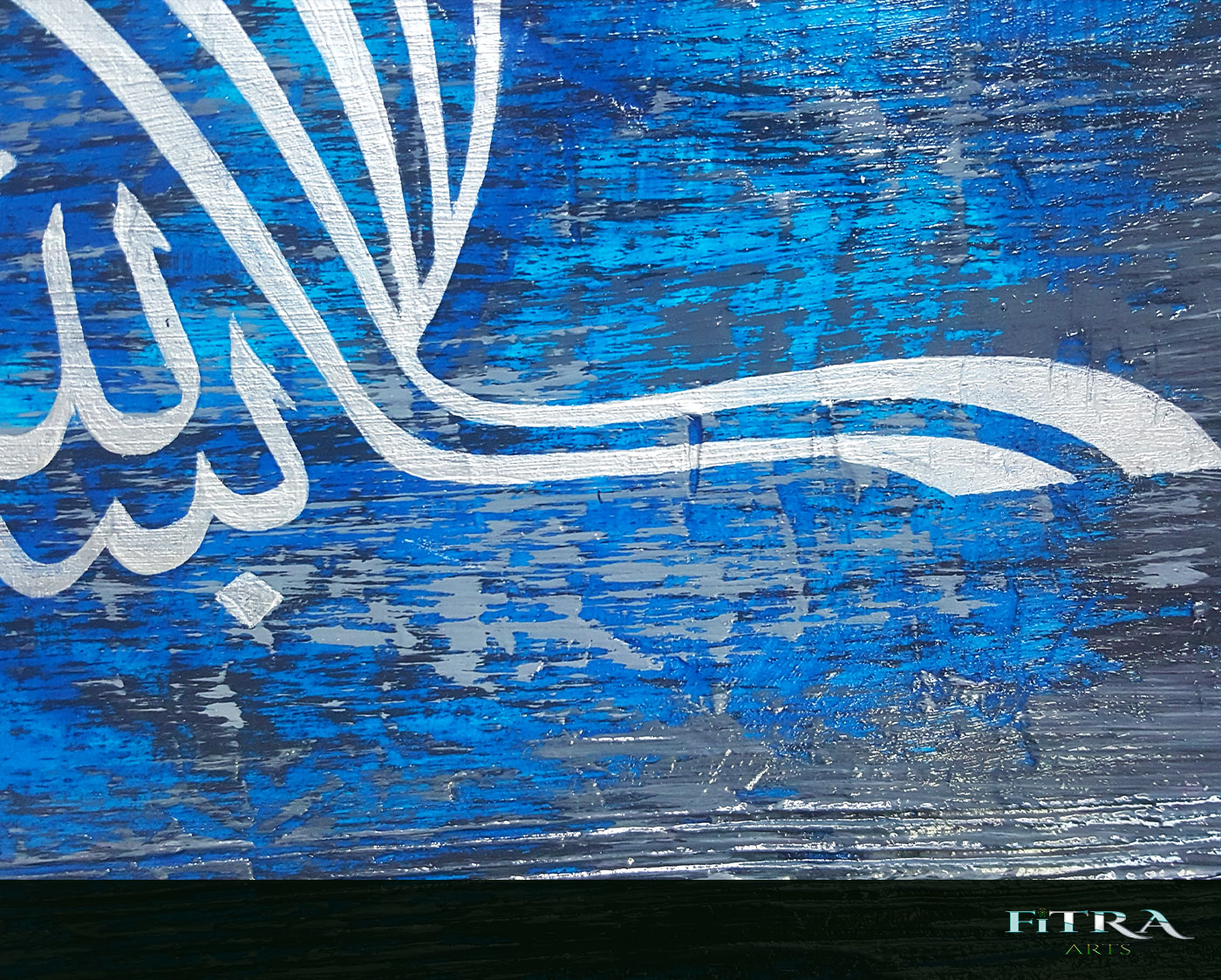
This beautiful Basmala Tughra calligraphy is rendered in Silver on a textured abstract background comprising of blues and grays.
Reviews
There are no reviews yet.